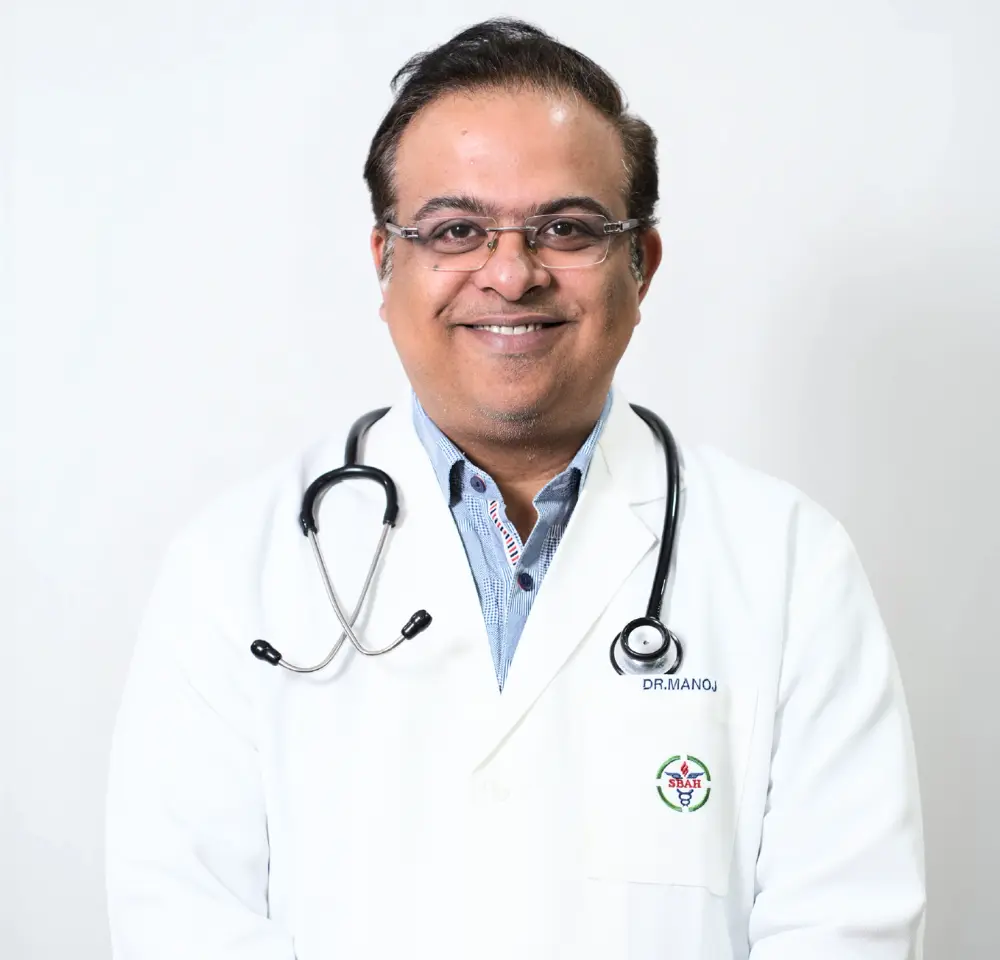

A hernia repair used to mean a long cut, a longer hospital stay, and weeks before you could go back to work. That’s not how it works here. Since 2019, Dr. Manoj Khurana has been doing hernia repair, weight loss surgery, and general surgical procedures through small incisions instead of open ones, using a Karl Storz 4K 3D laparoscopy system. Emergency surgery doesn’t keep OPD hours. It’s available around the clock.

MBBS, MS, FACS (US), FBMS
Year of Expereince
Availability
Appendicitis, a bowel obstruction, an injury that needs immediate attention, none of that waits for OPD hours, so neither does this.
Inguinal, umbilical, and incisional hernias, repaired through small incisions with a generally shorter recovery than open hernia surgery.
For patients where diet and exercise haven't been enough and obesity is affecting their health, gastric sleeve and gastric bypass procedures are performed laparoscopically.
Gallbladder removal, appendix removal, and other general surgical procedures, all done through the 4K 3D system.
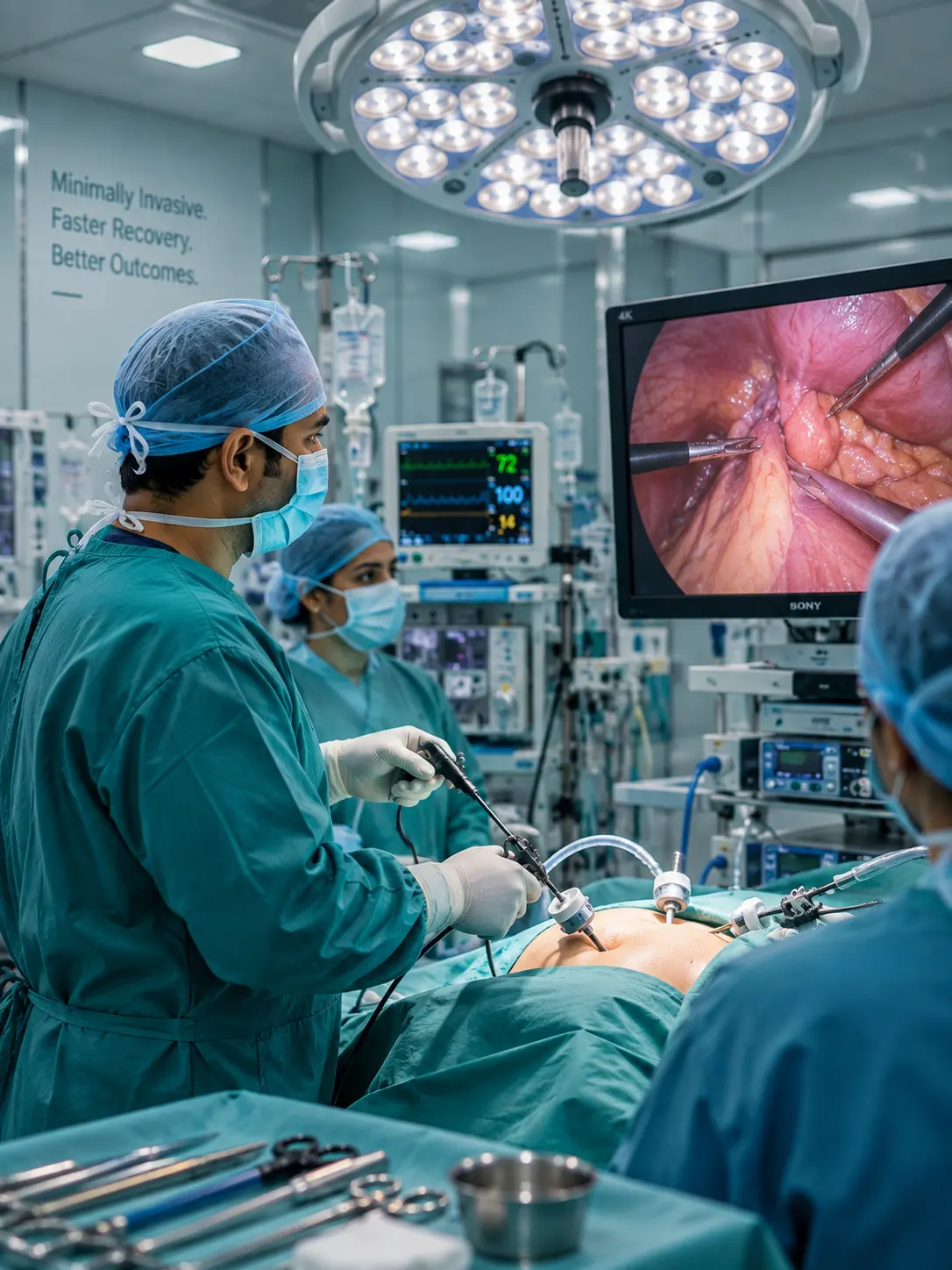
The department runs on a Karl Storz 4K 3D laparoscopic imaging system. It gives Dr. Khurana a sharper, more detailed view inside the body than older laparoscopic cameras, plus depth perception that flat 2D imaging just doesn’t have.

A sharper picture of the surgical area than standard imaging. Useful for spotting small structures during hernia and bariatric procedures.

Depth perception during surgery, closer to how the eye actually sees rather than a flat screen.

Most procedures here are done laparoscopically, through small cuts, not one large incision.
Long, specialized instruments are guided by the magnified 4K 3D view, which allows more exact movement inside the body than instruments used with older imaging.

Smaller incisions and a clearer surgical view generally mean less bleeding during the procedure compared to open surgery.

A shorter hospital stay and quicker recovery are typical with this approach, though the exact timeline still depends on the procedure and the patient.
A hernia repair and a bariatric surgery patient don’t have much in common medically. They end up in the same department here because both are handled laparoscopically. Dr. Khurana trained specifically for this: MS, then FACS in the US, then a further fellowship in bariatric surgery. That’s a large part of why the smaller-incision approach is the default here, not the exception.
Not every case is planned weeks in advance. Appendicitis doesn’t check the clinic’s hours, and this department runs emergency surgery every day, every hour, right alongside its scheduled hernia and bariatric cases.
Hernia repair, bariatric surgery, and general procedures go through small incisions wherever the case allows for it.
Emergency general surgery runs at any hour. It isn't limited to OPD timings.
Dr. Khurana holds a Fellowship of the American College of Surgeons (FACS) from the United States, on top of his MS in General Surgery.
Weight loss surgery patients don't have to travel out of Kurukshetra for this.
Department Established
Surgeries Performed
Emergency Surgery Care
Advanced Laparoscopic Imaging
My hernia had been bothering me for months, but I kept putting off surgery because I'd heard the recovery was rough. Dr. Khurana did it laparoscopically, small cuts instead of one big one. I was up and walking the next day and back to my shop within a couple of weeks, way sooner than I expected.
My son had sudden severe stomach pain at night and it turned out to be appendicitis. We didn't have an appointment or anything, just walked in. They took him in for surgery quickly and he was fine within a day or two. As a parent, that kind of speed when you're panicking means everything.
I'd struggled with my weight for years and my health was starting to suffer for it, joint pain, sugar levels creeping up. Dr. Khurana walked me through the bariatric surgery options after a proper evaluation, not a rushed decision. Went with the gastric sleeve. It's been a gradual process since, but I finally feel like I'm moving in the right direction.
Surgery done through a few small incisions using a camera and long instruments, instead of one large open cut. Most hernia and general surgery cases here go this route, but not always, sometimes an open approach is still the better call for a specific case.
Mesh is placed to reinforce the weakened area, inserted and secured through small incisions rather than one long cut. Recovery is generally faster than open hernia surgery, though how soon you’re back to normal activity depends on your job and the type of hernia
Generally, patients where obesity is affecting health and diet or exercise alone hasn’t worked. It’s a decision made after evaluation, not something scheduled on a first visit.
Yes, 24×7, for appendicitis, bowel obstructions, and similar conditions that need immediate attention. Come in directly for an emergency instead of waiting for an appointment slot.
Mainly what the surgeon can see during the operation, a sharper, more detailed picture with depth perception. For the patient, that generally means more precise surgery, though the technology doesn’t replace the surgeon’s skill or judgment.