

HEART & VASCULAR CARE

Department of Cardiology

Chest pain doesn’t always mean a heart attack, but you don’t want to be the one guessing at 2 a.m. whether it does. Under Dr. Rishabh Marwah, the Cardiology department at Shri Balaji Aarogyam Hospital in Kurukshetra runs a 24×7 cath lab for emergencies like heart attacks, alongside routine cardiac diagnostics and pacemaker implantation for patients whose heart rhythm needs correcting. Patients no longer need to travel to Delhi or Chandigarh for this level of cardiac care.

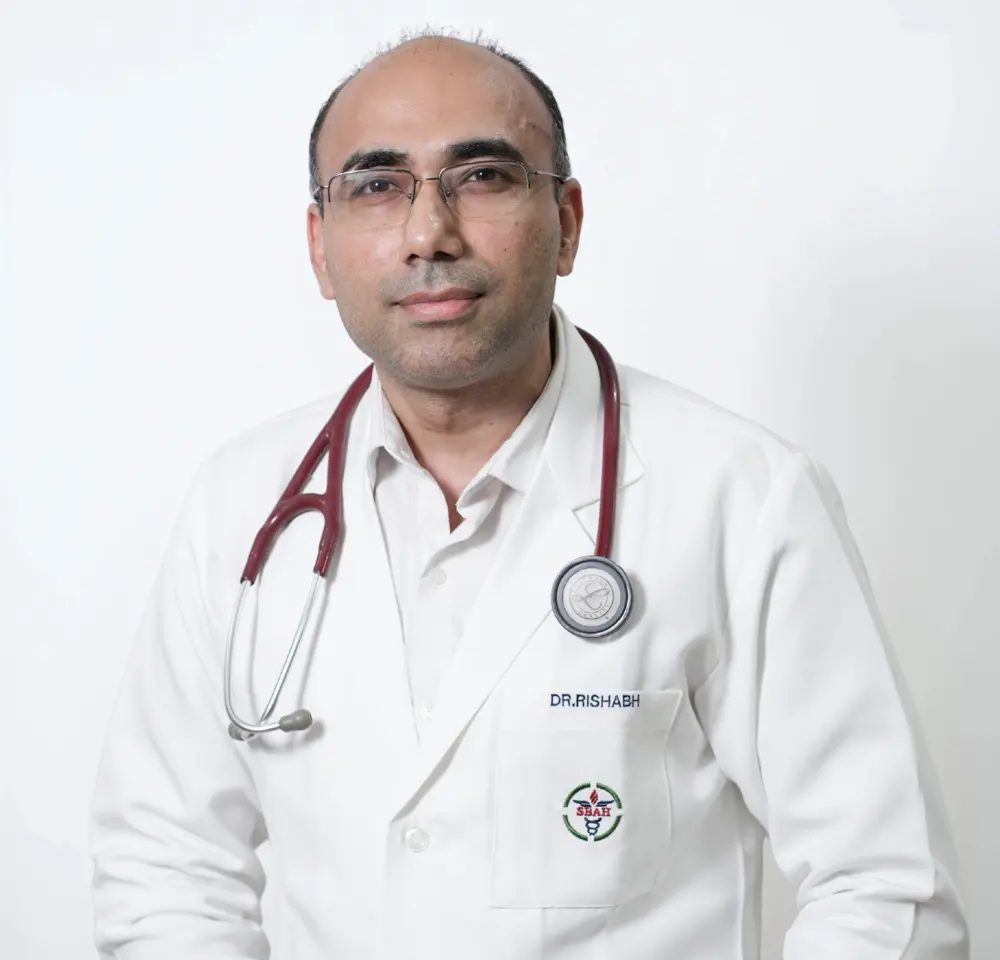
Dr. Rishabh Marwah

MD, DM (Cardiology)
10+

Year of Expereince

24/7

Availability

WHAT WE OFFER

Scope of Services

24x7 Emergency Cardiac Care

For heart attacks and other cardiac emergencies that need immediate attention, day or night.

Coronary Angiography & Angioplasty.

Diagnosis and treatment of blocked or narrowed arteries, performed in the cath lab.

Temporary & Permanent Pacemaker Implantation

For patients whose heart rhythm is too slow or irregular on its own, a pacemaker helps keep it steady, either as a short-term measure or a permanent implant.

Holter, Echo & TMT Diagnostics.

A Holter monitor tracks your heart's rhythm over 24 to 48 hours as you go about your day. An echocardiogram (echo) uses ultrasound to look at how the heart is pumping. A TMT, or treadmill test, checks how your heart performs under physical exertion.

ADVANCED TECHNOLOGY

A Cath Lab That's Ready When It Matters

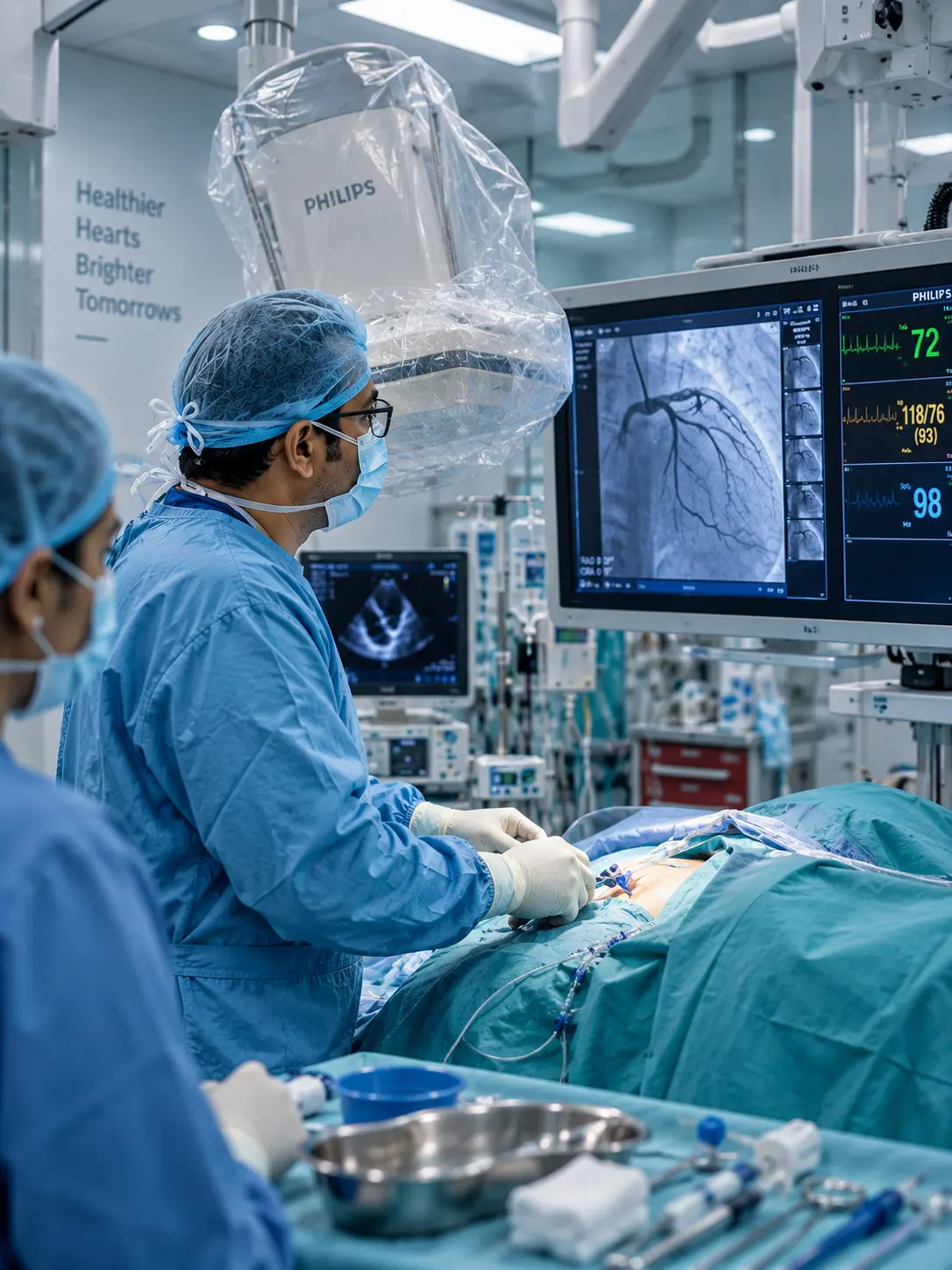
The department runs an advanced cath lab used for coronary angiography, which images the blood vessels around the heart to check for blockages, and angioplasty, the procedure to open a blocked artery, usually with a stent. Both are available around the clock, not limited to scheduled hours.

Coronary Angiography

A dye is injected and imaged in real time to show exactly where an artery is blocked or narrowed.
Angioplasty & Stenting

Once a blockage is found, the artery is widened and a stent, a small mesh tube, is placed to keep it open, often in the same sitting as the angiography.

Radial Artery Access

Many procedures are done through the wrist rather than the groin, which generally means less bleeding risk and a faster return to walking around after the procedure.

24x7 Cath Lab Availability

A heart attack doesn't wait for OPD hours, so the cath lab and the team running it are available at any hour.

Continuous Cardiac Monitoring

Patients are monitored closely after a procedure to catch any rhythm or pressure changes early, rather than checked periodically.

Fast Emergency Response

For a heart attack, the time between arrival and getting the blocked artery opened matters directly to how much heart muscle is saved. The department is set up to move quickly on that specific window.

OVERVIEW

From a Routine Checkup to aHeart Attack at 2 A.M.

Most people who walk into this department aren’t having a heart attack. They’re here because a doctor flagged something on a checkup, or they’ve had unexplained breathlessness, or their heart occasionally skips or races and they want to know why. Diagnostics like Holter monitoring, echo, and TMT are usually where that investigation starts.


Then there’s the other kind of patient. Someone comes in with crushing chest pain, and there’s no time for a slow workup. That’s what the 24×7 cath lab is actually for, getting a blocked artery identified and opened as fast as possible, because with a heart attack, delay costs heart muscle.

24x7 Cath Lab

Emergency angiography and angioplasty available at any hour, not limited to scheduled procedure slots.

Complete Cardiac Diagnostics

Holter, echocardiogram, and TMT testing available in-house, without needing to visit a separate diagnostic center.

Pacemaker Implantation

Both temporary and permanent pacemaker procedures are performed by the department for patients with rhythm disorders.

Specialist-Led Care

Dr. Rishabh Marwah holds a DM in Cardiology, a superspecialty qualification specific to heart care, not a general medicine background alone.

WHY PATIENTS CHOOSE US

In-House

Holter, Echo & TMT Diagnostics

Temporary & Permanent

Pacemaker Implantation

24/7

Emergency Cardiac Care

On-Site

Advanced Cath Lab

HAPPY PATIENTS

Thousands of Families Have Left With A Smile

The doctor suggested a TMT after I mentioned some occasional breathlessness during my morning walks. I was expecting bad news, but the test and echo together showed my heart was fine, it was more about my fitness level than anything serious. Dr. Marwah explained the report line by line, which I appreciated. Took about two hours total, in and out the same morning.

Anil Chhabra Karnal

My father had chest pain that wouldn't go away around midnight, and we brought him in not knowing what to expect. Within a short time he was taken for angiography, and they found a blockage that needed a stent. It's been a few weeks now and he's back to his normal routine, walking daily. The team moving quickly that night made all the difference for us.

Sunita Rani Shahabad

I'd been getting occasional dizzy spells for a couple of months and my local doctor referred me here. Dr. Marwah ran a Holter test that picked up an irregular rhythm I wasn't even fully aware of. Ended up needing a pacemaker, which honestly sounded scarier than it was. Recovery took some rest, but I've had no more of those dizzy episodes since.

Ram Kumar Pehowa
Common Questions

Frequently Asked Questions

Is all chest pain a sign of a heart attack?

No. Chest pain can come from muscle strain, acid reflux, anxiety, and several other causes that have nothing to do with the heart. That said, chest pain shouldn’t be self-diagnosed. If it’s severe, sudden, or comes with sweating, breathlessness, or pain spreading to the arm or jaw, treat it as an emergency and get evaluated immediately.

A thin tube is guided to the blocked artery, usually through the wrist or groin. A small balloon widens the narrowed section, and a stent, a small mesh tube, is typically left in place to keep the artery open. It’s done in the cath lab, generally without open-heart surgery.

A pacemaker is considered when the heart’s natural rhythm is too slow or irregular on its own. Some patients need a temporary pacemaker for a short-term issue, while others need a permanent implant. Which one applies depends on the specific condition, decided after diagnosis.

An echo is an ultrasound that shows how well the heart is pumping and whether the valves are working properly. A TMT checks how the heart performs while you’re physically active, usually on a treadmill. A Holter monitor is worn for a day or two to catch rhythm irregularities that a single in-clinic ECG might miss because they don’t happen constantly.

The cath lab and cardiac emergency team are available 24 hours a day. If you or someone with you is having chest pain, breathlessness, or other signs of a cardiac emergency, come in immediately rather than waiting to see if it passes.