



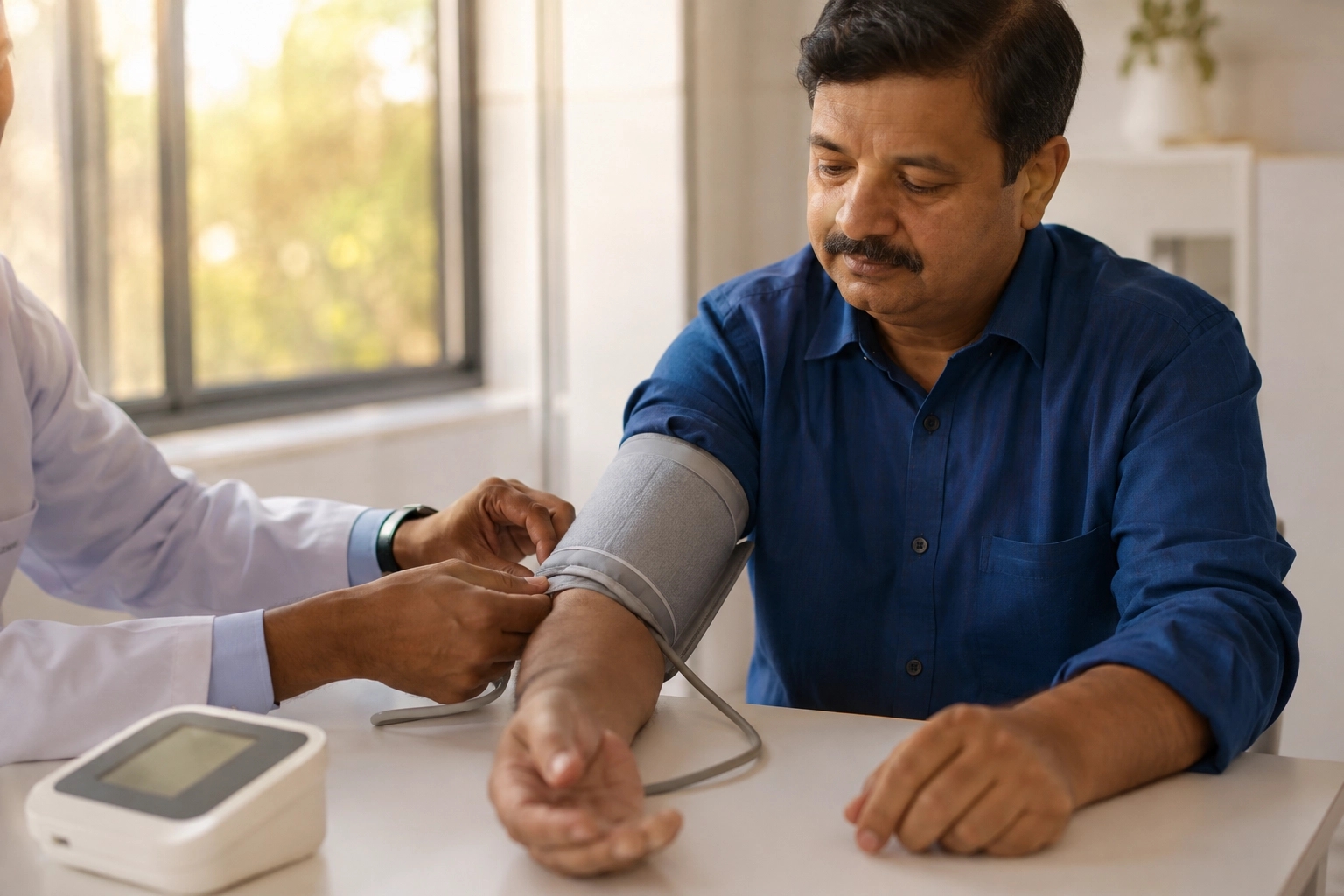
A very common thing happens in our OPD almost every single day. A patient comes in for something else entirely, a headache, a check-up before a family function, or a routine test before surgery, and we find their blood pressure is dangerously high. When we ask if they knew, the answer is often the same. They say their BP has always been a little high, and they have simply gotten used to it. This is one of the most dangerous habits we see, and it is the reason high blood pressure is called the silent killer.
Why High BP Does Not Feel Like an Emergency
Unlike a broken bone or a bad fever, high blood pressure rarely announces itself with obvious symptoms. Most people with elevated BP feel completely normal. They go to work, manage their household, and live their daily life without a single sign that something is wrong inside their arteries. This is exactly what makes it so dangerous. While you feel fine, sustained high pressure is slowly damaging the walls of your blood vessels, straining your heart, and putting extra load on your kidneys and eyes, all without a single warning sign.
By the time symptoms do appear such as severe headaches, chest discomfort, blurred vision, or shortness of breath, the pressure has often already been high for months or even years, and some damage may already be done.
What Counts as High Blood Pressure
A normal blood pressure reading is generally considered to be around 120 over 80. Once your numbers consistently cross 140 over 90, you are in the range doctors classify as hypertension. Anything that regularly falls between these two ranges is called elevated blood pressure, and it deserves attention too, not just the officially high numbers.
One reading being slightly high is not automatically a diagnosis. Blood pressure naturally fluctuates through the day based on stress, physical activity, and even how nervous you feel at the clinic. This is exactly why doctors look at multiple readings over time rather than a single number, and why home monitoring is often recommended for people on the borderline.
Who Should Be Checking Regularly
Certain groups need to be more disciplined about checking their blood pressure rather than waiting for a doctor to bring it up.
Anyone above the age of 40, since risk naturally increases with age
People with a family history of hypertension, heart disease, or stroke
Individuals who are overweight or have a sedentary lifestyle
Anyone with diabetes, since high BP and diabetes often occur together and worsen each other
Women who had high blood pressure during pregnancy
People under chronic stress, whether from work or personal circumstances
Regular smokers or those who consume alcohol frequently
If you fall into even one of these categories, a home BP monitor is a worthwhile investment, and checking once every week or two should become a habit, not an afterthought.
What Untreated High BP Actually Does Over Time
This is the part patients are often surprised to learn. High blood pressure that goes unmanaged for years is one of the leading causes of heart attacks, strokes, kidney failure, and vision loss. It forces your heart to work harder than it should, which over time thickens and weakens the heart muscle. It damages the delicate blood vessels in your kidneys, gradually reducing their ability to filter waste from your blood. It can also weaken blood vessels in the brain, increasing stroke risk significantly.
None of this happens overnight, which is precisely why it gets ignored. The damage builds slowly and silently until a major event forces attention, and by then treatment options are often more limited and more urgent.
Managing It Does Not Have to Be Complicated
For a large number of patients, blood pressure can be brought under control with a combination of lifestyle changes and, when needed, medication.
Reducing salt intake makes a real difference, and this includes hidden salt in packaged snacks and pickles, not just what you add at the table.
Regular physical activity, even something as simple as a thirty minute walk most days, has a measurable effect on blood pressure over a few weeks.
Managing weight, particularly around the waist, reduces strain on the entire cardiovascular system.
Cutting back on alcohol and quitting smoking are two of the most impactful changes a person can make for their blood pressure specifically.
Managing stress through better sleep, and taking breaks during a demanding day, plays a bigger role than most people realize.
For patients whose BP does not respond adequately to these changes, medication is not a sign of failure. It is simply the right tool for a condition that needs more support, and most patients manage it well once they find the right combination under proper medical guidance.
Why Ignoring It Costs More Later
We often see patients who avoided treatment for years because they felt fine, only to arrive at the hospital with a heart attack or stroke that could have likely been prevented with early management. The irony is that controlling blood pressure early is simple, affordable, and low risk compared to treating its complications later. A heart attack recovery, dialysis for kidney failure, or rehabilitation after a stroke is a far harder road than a daily tablet and a few lifestyle adjustments.
How We Approach Blood Pressure Care at Shri Balaji Aarogyam Hospital
Our General Medicine and Cardiology teams work closely on hypertension cases, starting with a proper evaluation of your overall cardiovascular risk rather than treating the number in isolation. This includes checking how your heart, kidneys, and blood vessels are handling the pressure, not just prescribing a tablet and sending you home.
If you have been told your BP is a little high and left it at that, this is the right time to get it properly evaluated. It takes one visit to understand where you stand, and it could change the next twenty years of your health.