



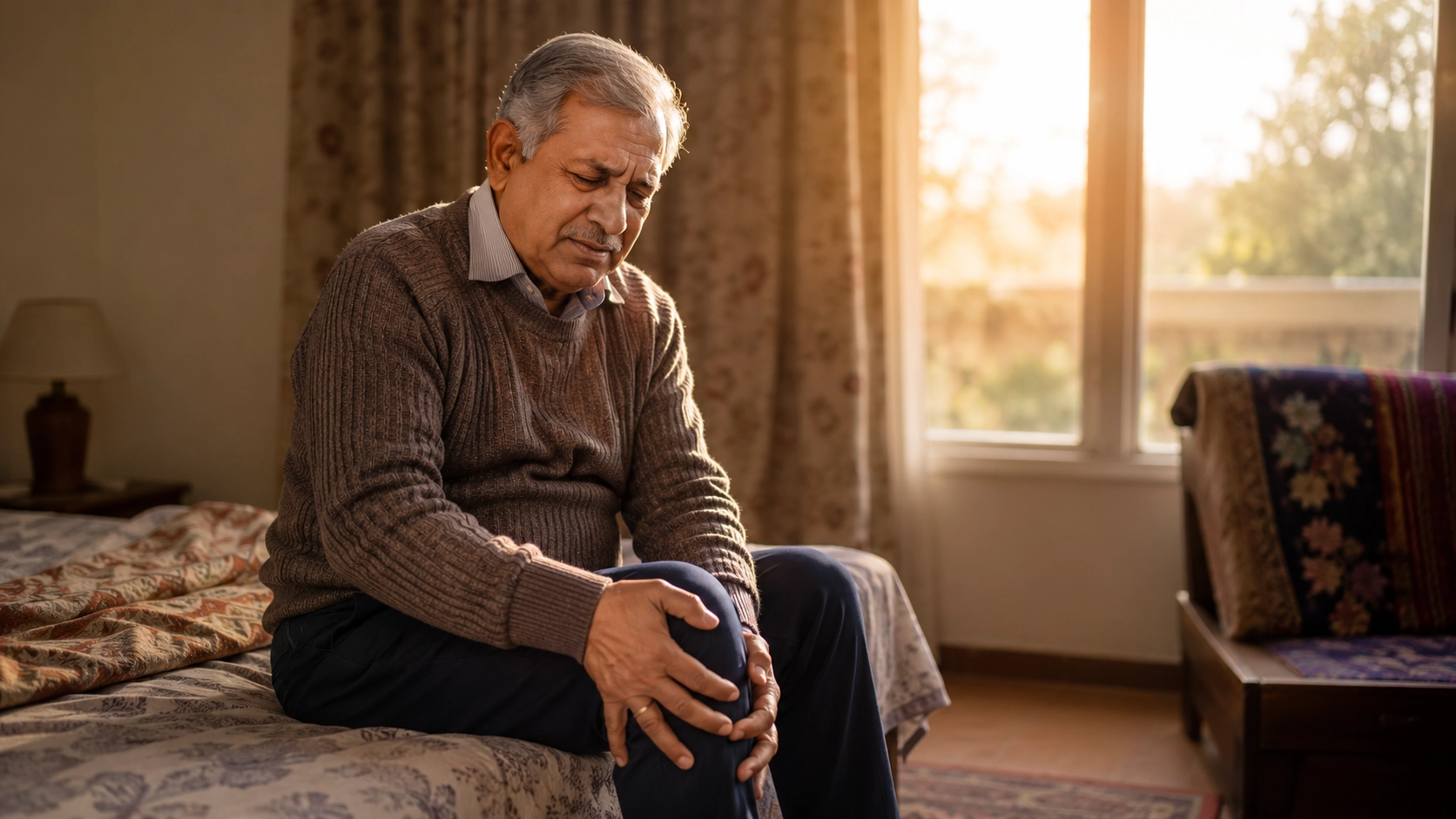
Every year, as the temperature drops in Kurukshetra and the surrounding areas, our OPD sees a familiar pattern. Patients who were managing their joint pain just fine through the summer suddenly start complaining about stiff knees, aching shoulders, and a back that feels like it belongs to someone twenty years older. If this sounds like you or someone in your family, you are not imagining it. There is a real, physical reason winter makes joints hurt more, and understanding it can help you manage the pain instead of just living with it.
Why Cold Weather Affects Your Joints
Cold temperatures cause the tissues around your joints to contract slightly, and the fluid that keeps your joints lubricated tends to thicken in colder conditions. This makes movement feel stiffer, especially first thing in the morning. Blood circulation also slows down a little in colder weather as the body works to keep your core warm, which means less blood flow reaching your hands, knees, and feet. For anyone who already has some wear and tear in their joints, whether from age, an old injury, or early arthritis, this combination makes the pain far more noticeable.
Barometric pressure changes that come with winter weather are another factor. Many patients with arthritis report that they can predict a change in weather just from how their joints feel, and there is genuine science behind this. Lower pressure allows tissues to expand slightly, which can press on nerves around already sensitive joints.
Who Is Most Affected
While anyone can feel some stiffness in winter, a few groups tend to notice it much more:
People above 45, especially those with early signs of osteoarthritis
Patients recovering from a previous fracture or joint surgery
People with a sedentary lifestyle who sit for long hours, whether at a desk or at home
Farmers and outdoor workers who are directly exposed to cold mornings
Women going through or past menopause, due to changes in bone density
If you fall into one of these groups, winter is the season to be a little more proactive about your joint health, not less.
What You Can Do at Home
The good news is that most winter joint pain can be managed well with a few consistent habits.
Keep moving. It sounds counterintuitive when your joints hurt, but staying still actually makes stiffness worse. Even a short walk indoors or light stretching in the morning keeps the joint fluid moving.
Layer up around the joints specifically. A simple knee wrap or wearing warmer socks can make a real difference, especially for people who already have some joint sensitivity.
Stay hydrated. People tend to drink less water in winter, but dehydration makes the fluid around your joints thicker, which adds to the stiffness.
Warm oil massage before a warm water bath can help relax the muscles around a painful joint, particularly for the knees and lower back.
Watch your Vitamin D. Winter means less sun exposure, and low Vitamin D is directly linked to joint and bone pain. A simple blood test can tell you if you need supplementation.
When You Should Stop Managing It at Home
Occasional stiffness that eases with movement is normal. But there are certain signs that mean it is time to see a doctor rather than wait it out.
If the pain is accompanied by visible swelling or redness around the joint, if one knee or shoulder feels warmer than the other, if the pain is waking you up at night, or if you are avoiding stairs and daily activities because of it, these are signals that something more than seasonal stiffness is going on. Sudden, severe joint pain that comes with fever should never be ignored, as it can sometimes point to an infection that needs urgent treatment.
Delaying a proper check-up in these cases often means the problem gets harder to treat later. What could have been managed with medication and physiotherapy in the early stage sometimes turns into a case that needs surgery simply because it was left unchecked for months.
How We Approach Joint Pain at Shri Balaji Aarogyam Hospital
Our Orthopedic department sees this exact pattern every winter, and our approach starts with a proper diagnosis rather than jumping straight to medication. Depending on what the X-ray or examination shows, treatment can range from physiotherapy and pain management to advanced options like robotic knee replacement for patients with more severe joint damage.
If winter has been harder on your joints than usual this year, do not wait for it to become unbearable before getting it checked. A short consultation now can save you months of discomfort later.