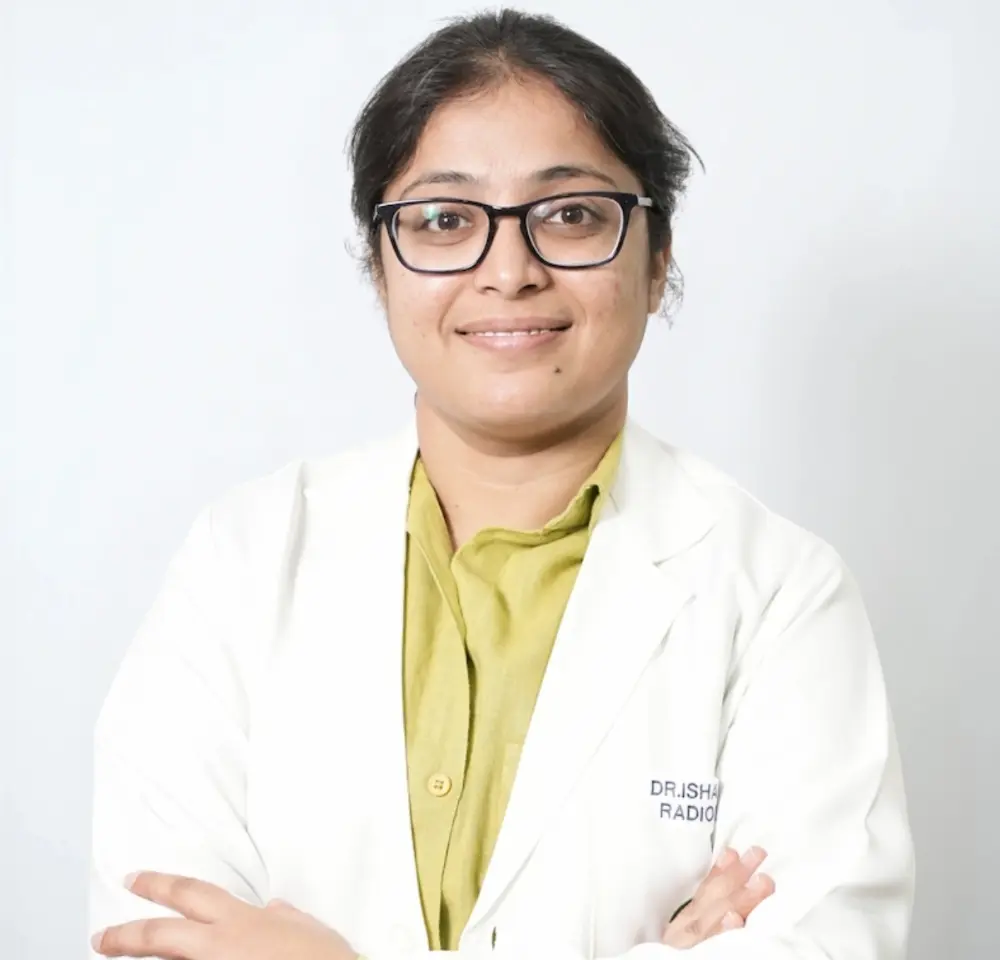

A diagnosis is only as good as the image behind it. The Advanced Radiology department at Shri Balaji Aarogyam Hospital in Kurukshetra, led by Dr. Isha Rani Goyal, gives every other department in the hospital the imaging they need to actually see what’s going on, whether that’s a routine scan or an urgent bedside X-ray for a patient who can’t be moved.

DMRD (Radiology)
Year of Expereince
Availability
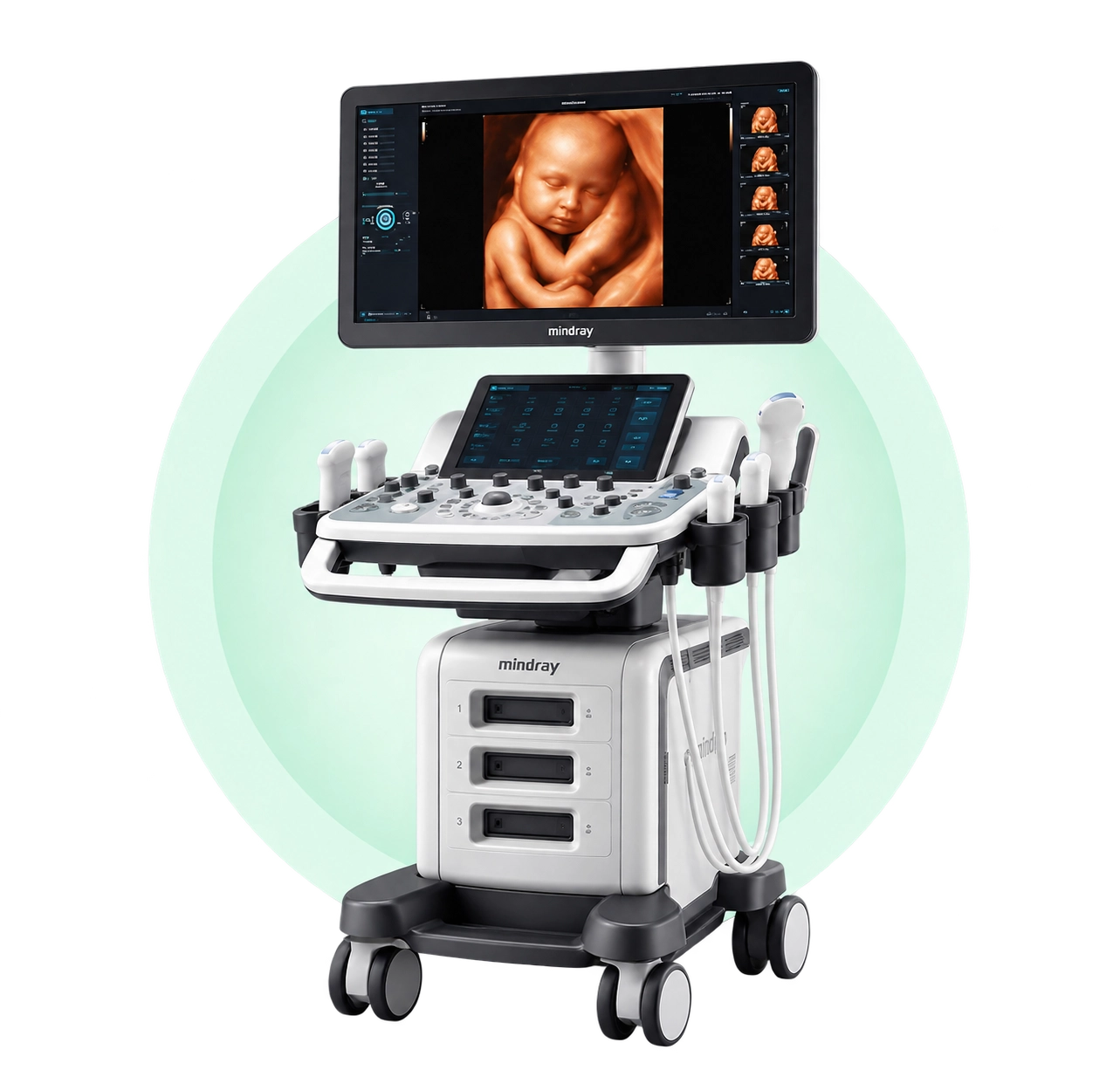
Ultrasound imaging supported by AI-assisted analysis, used across general, obstetric, and abdominal scans.
Detailed cross-sectional imaging for diagnosis, and vascular imaging specifically for checking blood vessels.
Imaging brought directly to patients in the ICU or those who can't be safely moved to the radiology department.
Diagnostic imaging support for other departments across the hospital, coordinated as part of a patient's overall care.
Some scans need the patient to come to the machine. Others need the machine to come to the patient, someone in the ICU who can’t be moved, for instance. This department covers both, along with imaging detailed enough to catch what a standard scan might miss.

AI-assisted ultrasound helps flag details that are easy to miss on a standard scan, though the radiologist's own reading still decides what it means for you.
Cross-sectional imaging that gives a much more detailed look inside the body than a standard X-ray, used for everything from injury assessment to detecting internal issues.

A CT scan focused specifically on blood vessels, used to check for blockages or abnormalities without needing an invasive procedure.

For patients who can't be moved to the radiology department, the X-ray comes to them instead, in the ICU or their hospital bed.

The same logic as bedside X-ray, ultrasound imaging performed at the patient's bedside when moving them isn't practical or safe.

Additional imaging support for other departments in the hospital, ordered as part of diagnosis or ongoing treatment, not limited to a standalone visit.
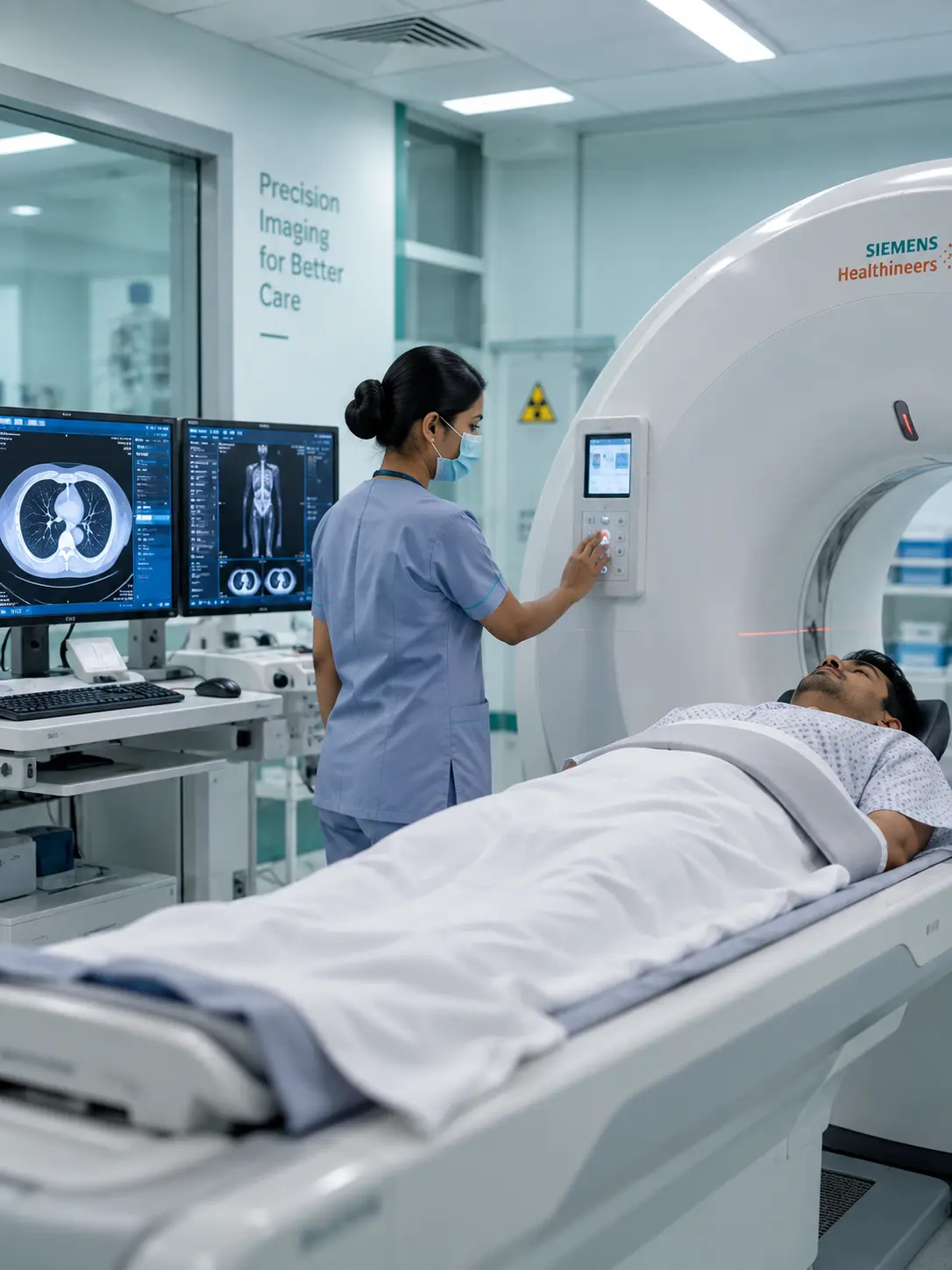
Radiology doesn’t usually get mentioned first when someone talks about a hospital. It’s the department working behind almost every other one, the orthopaedic surgeon planning a fracture repair, the cardiologist checking blood vessels, the ICU team monitoring a critical patient overnight. None of that works without accurate imaging first.
Dr. Isha Rani Goyal’s team handles both ends of that job: scheduled scans for outpatients, and urgent bedside imaging for patients who can’t wait or can’t be moved. A CT angiography booked for next week and an X-ray needed in the ICU at 3 a.m. are both this department’s responsibility.
Modern ultrasound technology assists in catching details a standard scan might miss.
X-ray and ultrasound can be done at a patient's bedside when moving them isn't an option.
Vascular imaging is available without needing a separate diagnostic center visit.
Imaging here isn't a standalone service. It's built into how every other department at the hospital diagnoses and treats patients.
Ultrasound
& CT Angiography
X-Ray & Ultrasound
Imaging Support Hospital-Wide
My father was in the ICU after his surgery and couldn't be moved for scans, so the team brought the X-ray machine right to his bedside. It sounds small, but not having to worry about transporting him in that condition mattered a lot to us. Dr. Goyal's report came back quickly enough that the treating doctors could act on it the same day.
I'd been having some unexplained pain and my doctor ordered a CT angiography to rule out a blockage. I was nervous going in, but the scan itself was quick, and Dr. Goyal explained what they were checking for beforehand. Turned out fine, but having that clarity instead of just guessing was worth the visit.
I went in for a routine abdominal ultrasound and the technician mentioned something small that needed a closer look, which Dr. Goyal flagged in her reading. It could've easily been missed, I think. Got it followed up properly after that. Made me realize how much the actual reading of a scan matters, not just the machine.
A regular CT scan gives a detailed cross-sectional image of the body’s organs and structures. CT angiography specifically focuses on blood vessels, using a contrast dye to highlight them clearly, so it’s often used to check for blockages or abnormalities in arteries without a more invasive procedure.
It depends on the type of scan. Some CT scans, especially with contrast dye, may need you to fast for a few hours beforehand. Your doctor or the radiology team will let you know exactly what’s needed for your specific scan when it’s booked.
Yes. Bedside X-ray and bedside ultrasound are both available for patients in the ICU or anyone who can’t be safely moved to the radiology department.
It helps the technology flag details that could otherwise be easy to miss, but it doesn’t replace the radiologist’s judgment. The final reading and interpretation still comes from Dr. Goyal, not the software.
Turnaround depends on the type of scan and whether it’s urgent or routine. For emergency and bedside imaging, reporting is prioritized so the treating doctor can act on it quickly.