

Most people worry more about the anesthesia than the actual surgery. Will I wake up. Will it hurt. Will I feel it happening. Dr. Kuldeep Singh runs Anesthesiology at Shri Balaji Aarogyam Hospital in Kurukshetra, present for nearly every surgery and delivery that happens here, along with ongoing care for patients whose pain hasn’t gone away on its own.

MD (Anesthesiology)
Year of Expereince
Availability
Covering general, regional, spinal, and epidural anesthesia across surgery and delivery.
Both immediate post-surgical pain and longer-running chronic pain conditions.
Nearly every operation and every delivery in this hospital involves Dr. Singh before the surgeon or obstetrician even starts. Getting the anesthesia right is what makes the rest of it possible.

Full unconsciousness for surgeries that need it, monitored closely from the first minute to the last.
Numbing a specific part of the body while the patient stays awake, used for many orthopedic and lower-body procedures.

The same epidural technique used for painless normal delivery in the maternity department, administered here.

A check before surgery to flag anything, heart condition, allergy, medication, that could affect how anesthesia is given.

Pain control in the hours and days right after surgery, adjusted as recovery progresses.

Ongoing care for pain that's outlasted the original injury or condition, back pain, nerve pain, and similar long-term cases
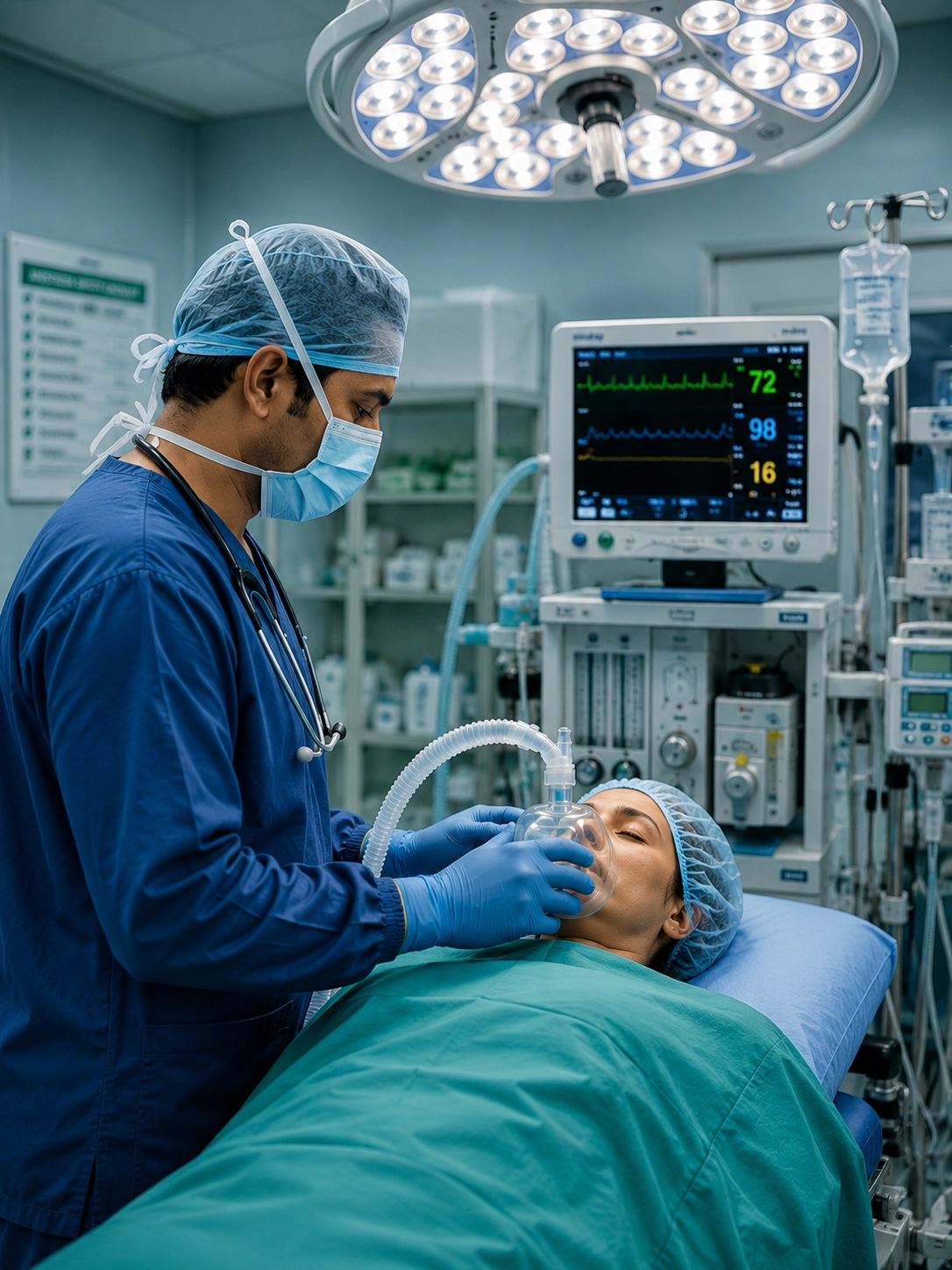
Patients rarely walk in asking for Dr. Singh by name. They meet him the morning of their surgery, or during labor when the epidural gets discussed, and most of the actual work happens while they’re not fully aware of it. That doesn’t make it a small job. Getting a dose wrong, missing a drug allergy, misjudging how a patient’s heart will handle anesthesia, these are the mistakes that turn a routine procedure into an emergency.
The pain management side runs on a completely different rhythm. Someone with chronic back pain isn’t in and out in an afternoon. It’s visits over months, adjusting what’s working and what isn’t, until the pain is actually manageable day to day.
Anesthesia support across departments, not limited to one type of procedure.
Epidural anesthesia for mothers choosing a painless normal delivery.
Checking for anything that could complicate anesthesia before the operation starts.
Ongoing care for chronic pain, tracked and adjusted over repeat visits.
Spinal Anesthesia
Assessment
for Painless Delivery
Management
I was more nervous about the anesthesia than my actual knee surgery, kept imagining I'd wake up mid-procedure. Dr. Singh sat with me beforehand, went through my medical history and explained exactly what would happen and when. Didn't feel a thing during surgery, and the whole thing went far smoother than I'd built it up in my head.
I opted for the epidural during my delivery, mostly on my sister's advice after her rough experience without one. Dr. Singh administered it and I stayed alert enough to push when the time came, just without the pain I'd been dreading for months. Made a genuinely difficult day much more manageable.
I'd had lower back pain for close to a year, tried all sorts of things with no lasting relief. Dr. Singh has been managing it over several visits now, adjusting the approach as we go instead of just repeating the same treatment. It's not completely gone, but it's manageable now in a way it wasn't before, and I can get through my workday.
Depends on the procedure. General anesthesia means you’re fully unconscious. Regional or spinal anesthesia numbs a specific area while you stay awake. Which one is used gets decided based on the surgery and discussed with you beforehand, not sprung on you at the last minut
Yes, when given by a trained anesthesiologist, which is standard practice here. It reduces or removes labor pain while keeping the mother fully alert and able to push when it’s time.
Your medical history, current medications, allergies, and general health get reviewed before surgery. This is how the anesthesia plan gets tailored to you specifically, instead of using the same approach for everyone.
It varies by procedure. Pain management starts immediately after surgery and gets adjusted over the following days as the body heals. If pain isn’t easing the way it should, that gets addressed rather than left alone.
Yes. Chronic pain, back pain included, is managed here as an ongoing condition, with treatment adjusted over repeat visits rather than a single fix.